The Product is the Factory
Will
The Standard Manufacturing Co. is a company building autonomous assembly lines.
Three months ago, we spoke with a company building cutting-edge environmental sensors for buildings. They had partnered with a Swiss contract manufacturer to bring their product to market. The results were staggering. Two years until the first pilot. Another year to full production. £5m spent on the project with over 60% on non-recurring engineering and industrialisation.
We are living through a veritable renaissance in hardware and deeptech. There is a growing appreciation that AI, as we near (or, indeed, have already passed) the AGI moment, has saturated the market for software - and that both the remaining bottlenecks and the unlocked opportunities live in the real world. Now we can will any software into existence.
But the same is not true for hardware.
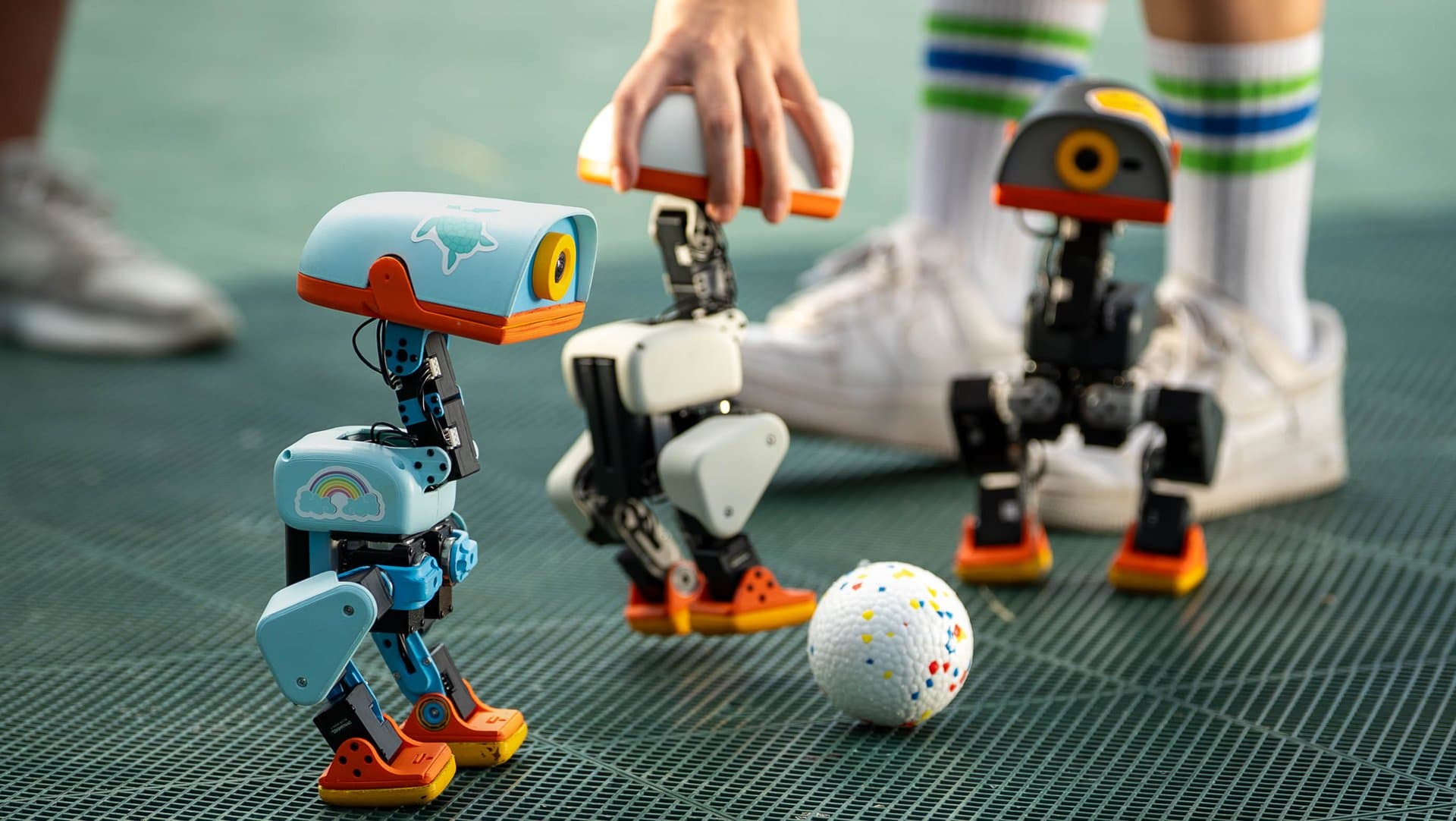
Hugging Face recently released the MicroDuck, developed by their acquisition of Pollen Robotics. Even with the full force of Shenzhen production (corralled by open-source OEM Seeed Studio), orders topped out within 24 hours - $4mm in total sales. Today, your order will take 6 months to arrive. Can you imagine a world where an AWS bucket takes 6 months to come online? With a 60% deployment fee every time the codebase changes? How does hardware become venturable with these economics?
This is the reality for scaling products in the real world. You cannot simply self-serve another instance, another virtual machine. AGI needs an interface to reality. Physical goods require atoms to move.
The Gap
I have already, in a previous essay, written about assembly being the final bottleneck. Seeed’s own video on the MicroDuck shows tens of technicians manually assembling the robot. I’ve visited that factory in Shenzhen myself, back in January. Injection moulding; CNC machining; SMT pick and place; PCB testing; these fabrication processes were all already completely or semi-automated. Final assembly is still manual - unable to leverage the very robots that they produce.
Musk popularised the philosophy that the Factory is the Product. That producing a Thing, at scale, at consistency, is dramatically harder than designing the Thing itself. Production Capacity, not Products. But there remains a glaring and critical hole in the manufacturing fabric that leaves hundreds of workers in a line still holding the screwdriver, even as one machinist is able to tend to ten CNC machines. Our mission is to close that gap.
Last week, we quoted a customer for a multi-million dollar assembly line. 4 cells comprising a complete end-to-end solution, fully simulated and rendered within days. Full production in 6 months from contract; automation from day 1. Handover only when we achieve a guaranteed Cpk and a contractual downtime ceiling.
How do we do it? We understand and derive the manufacturing process from first principles, from the engineering data itself. We deliver a bespoke assembly line that is optimised for that product and we do it autonomously, which means we do it fast. For us, the Product is the Factory.
Digital Siblings
Every major manufacturing process has an interface. Machining has G-Code. PCB fabrication has Gerbers. Moulding has tool geometry. With the same file, and the same universally agreed standards, it’s possible* to fabricate the same part whether in Stuttgart or Shenzhen. This is the paradigm that was born in the federal armories and now underpins every global supply chain.
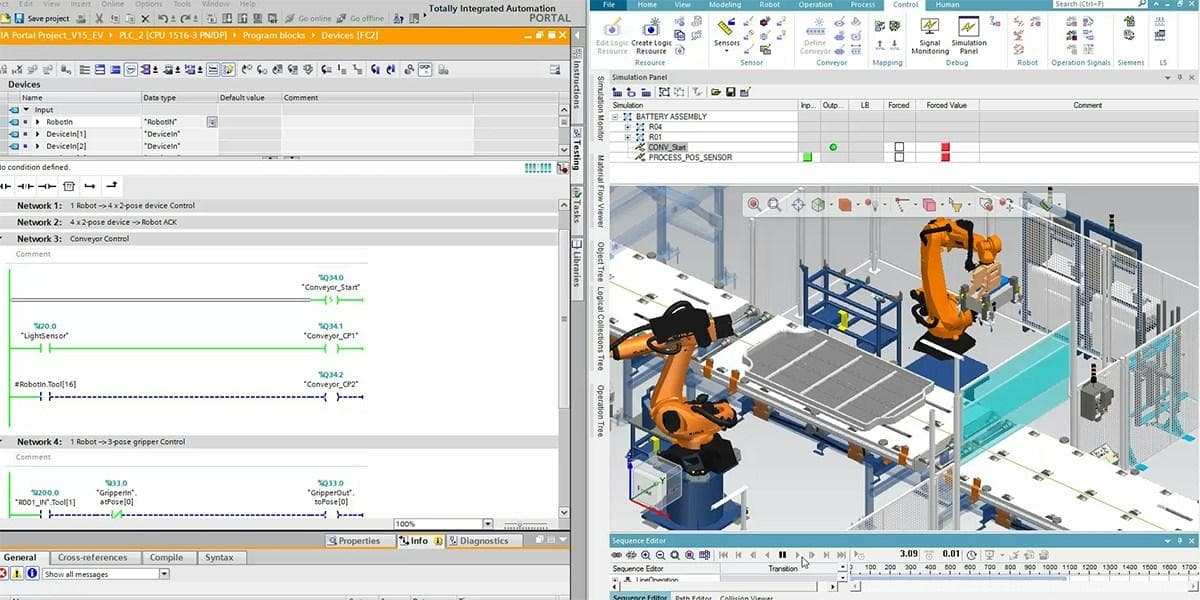
For assembly, we don’t lack candidates. There exist suites of software - Dassault Delmia, Siemens Process Simulate, AutomationML, STEP-NC. But every plan is authored by a human, and desperately few are portable between different cells. An engineer builds the model by hand over weeks to describe one line at one site. Imagine if, with every new part and iteration, you needed to redesign your 3D printer or CNC machine from scratch.
Many claim intelligence in robotics - physical AI - will solve this challenge. Richer perception; more capable policies; robots that can adapt to any environment. A general platform that can pick up new tasks at speed. Every process is different! Let’s teach the robots how to do everything.
This holds up well in the home; on the road; on a construction site - anywhere the environment is unseen. But a factory is not an unstructured world: a factory is arguably the one place on the entire planet where we can afford to control every variable. It is precisely a world where process efficiency is tracked down to the millisecond and unpredictable behaviour is intolerable.
Humans in the Factory
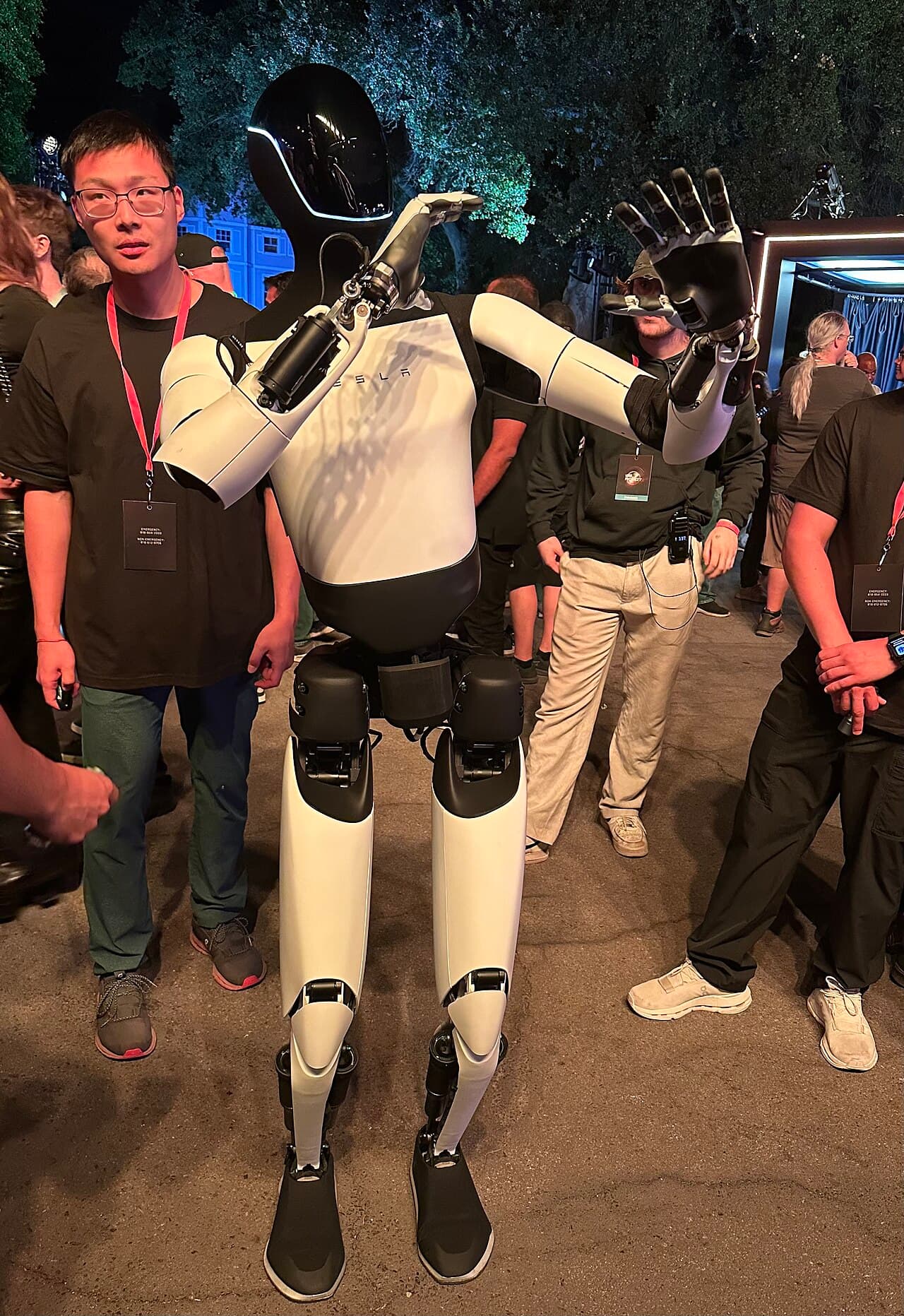
The humanoid is the perfect foil.
In many ways it’s hard to imagine it not capturing the zeitgeist: the form-factor naturally supports transfer and training on human skills; like us, it is adaptable and versatile to any environment; it promises to be plug-and-play into any brownfield site; and, above all, the romance - and narcissism - of real intelligence manifest in our own image.
But there are two directions where this falls short. First, inference at run-time. Variability is the antithesis to production. The golden rule of manufacturing engineering is process control. How tightly can you harness the stochasticity of the world? Randomness at production is suffered forever. Specialisation at design time is paid once, but amortised over every product. This is the fundamental Pareto behind every line.
We already have a language for this problem that is breathed by every manufacturing engineer. Takt time; Cpk; changeover time; scrap rate; downtime. Yet remarkably few demonstrations mention a single one. Centuries of research to develop manufacturing frameworks that the robotics industry continues to remain reluctant to use.
The second is physical. The last 200 years since the industrial revolution have involved systematically minimising the human role. The power-loom displaced hundreds of thousands of weavers in only a few decades. The reason is obvious - a specialised machine is over 10 times faster than the most dextrous human fingers. It both produces at a much higher consistency and consumes far less energy. Even with a humanoid robot that doesn’t tire, dexterity will always lose to pure physics.
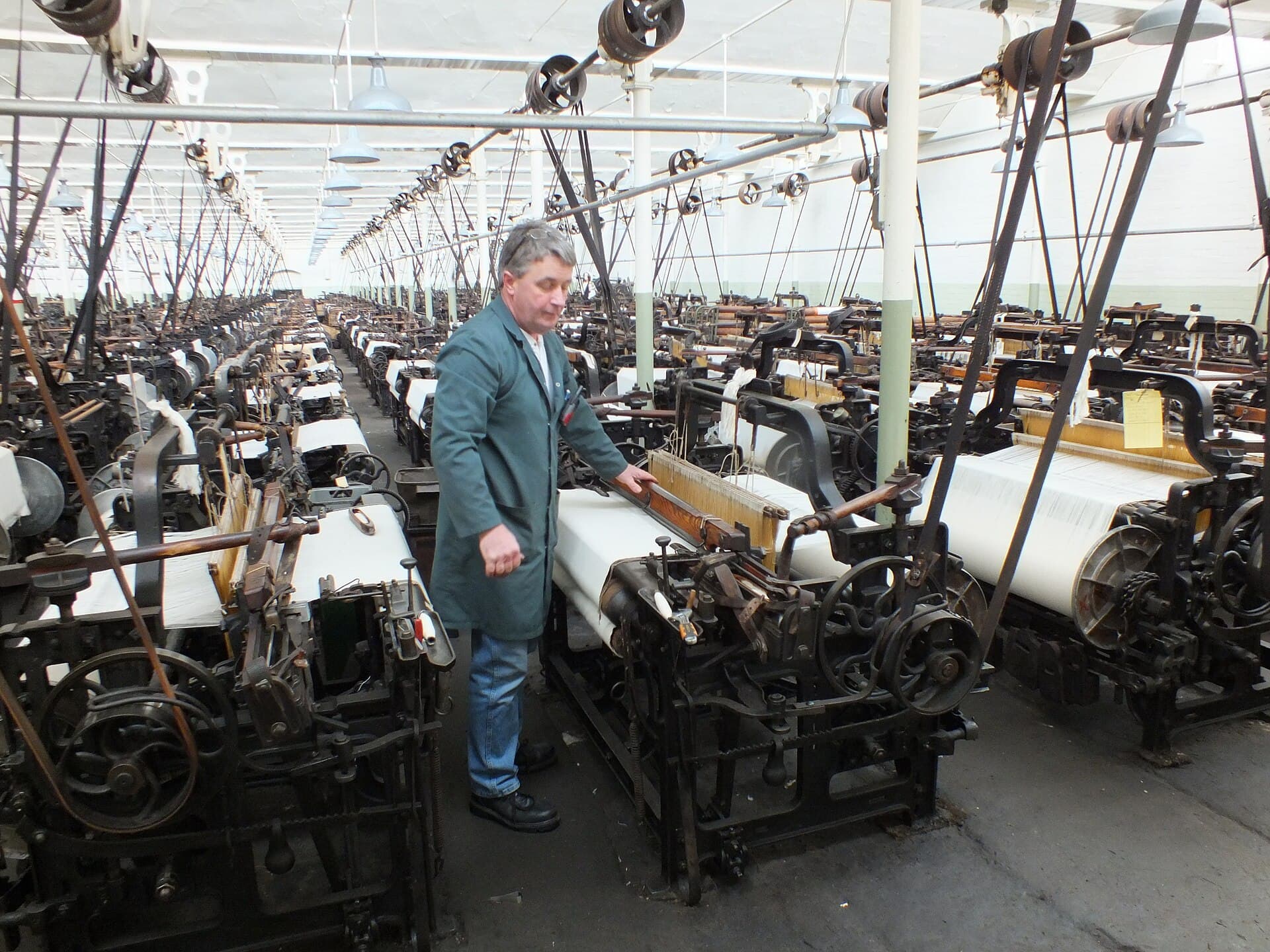
The factories of the future will not, and should not, look friendly to humans - let alone robotic humanoids.
The Intelligence Lives in the Compiler
Instead, intelligence belongs in design before production. We are already learning this lesson in software: use LLMs to generate deterministic programs at speed. Don’t run inference in the execution path, especially with real stakes.
For manufacturing it means building deterministic processes from unstructured data. The labour of the manufacturing engineer is to take the CAD, BOM, Drawings, SOPs, mates, tolerances, other data; and with it design machine-consumable processes. They design jigs, fixtures, dedicated tooling, conveyors, cells, lines. They select the right robots and tools. They program them, often by hand on the shop floor, to perform the specific actions needed to assemble a product. Here is the labour and here is the bottleneck.
The Standard Manufacturing Co.
We founded The Standard Manufacturing Co. to build the final factory.
We build the tools to reason over the physical product. We develop the platform to design any fixture, program any robot, configure any cell. We author the language to define any line. We train the intelligence to speak it - and then build the factory.
Our insight is this: the information already lives in the data. The role of the engineer is to apply intelligence: derive an assembly process from the design and their own tribal knowledge. Running the factory is easy; what is holding back real industrial output is designing a bespoke solution for each new product. This is where we target our intelligence and our efforts.
Every deployment, every new technique expands our design space. When each process is defined as a function of the geometry, the verticals start to fade away. The same screwdriving tool and torque controller is used to assemble a robotic actuator, a drone, a battery pack. We don’t learn how to make the perfect battery - rather, we perfect spot welding; strip laying; pick and place; glue application. We understand how each process is parameterised depending on the materials, the tolerances, the scale of the operation. We are composing the most comprehensive library of mechanical assemblies and process primitives.
The Product Is the Factory
The line between product and production is an unfortunate consequence of human organisation. Product engineers define what should exist; manufacturing engineers bring it to reality. No individual can perform both functions at once - not, at least, at scale. The disciplines are too disparate: teams end up fragmented, and spend months and years communicating requirements that expire daily.
We collapse the loop by removing the human dependency. What do we unlock? Now we start to design the line at the speed of software. Now we can scale production as soon as the drawings are ready. Now suddenly the NRE cost of a line goes down - and lower volumes start to make economic sense.
We can give our customers quotes in days - pilots in weeks - full production in months. We generate certification documents autonomously; change orders propagate instantly through the line; and we audit every process down to the screw.
Now the product defines the factory.
Our mission is human abundance, achieved through extreme scaling of all hardware. We build the systems that understand any physical assembly and compile the lines for mass production. We will bring automation to every factory.
The final factory will need no labour.
- Will
Image credits
- Microduck: Pollen Robotics press kit.
- Process Simulate: Siemens Digital Industries Software.
- Tesla Optimus: Steve Jurvetson, CC BY 2.0.
- Queen Street Mill: Clem Rutter, CC BY 3.0.