Who is Building the Dyson Sphere?
Will
I visited tens of factories during my time studying manufacturing engineering at Cambridge. I was able to tour behind the scenes on shop floors ranging from local, 30-people assembly lines to $100bn+ listed companies, building everything from gas sensors to construction vehicles. The reality? Manual assembly processes tracked on paper slips. Training contract workers who churn on a quarterly basis. Robotic arms relegated to inventory because the vendor has month-long lead times to send out an engineer.
Ivan Zhao recently wrote about AI being steel for organisation. That is, a step change in capability that disrupted the human condition. When steel enabled construction of skyscrapers and megacities, it wasn’t just supporting higher floors but fundamentally disrupted human lifestyle - one with increasing confusion but even greater freedom. Global manufacturing, for all its inefficiencies, had an output of $47tn in 2025. What will drive the next paradigm shift in manufacturing?
Manufacturing as a Thesis
My last year was spent as the first engineer at a European defence company in stealth. We hired a phenomenal engineering, product, and manufacturing team - but that only highlighted further the challenges of vertically manufacturing at scale. However brilliant the product, there are limited options for going from 1 to 100,000 units a month. Usually, this means sending your entire IP out to an OEM; acquiring a seasoned manufacturing company; or hiring hundreds of low-skilled assemblers. For me, it proved two things: that manufacturing scalability is the biggest bottleneck to sovereignty; and that a product company does not have the bandwidth to invest in innovating a step-change in capability.
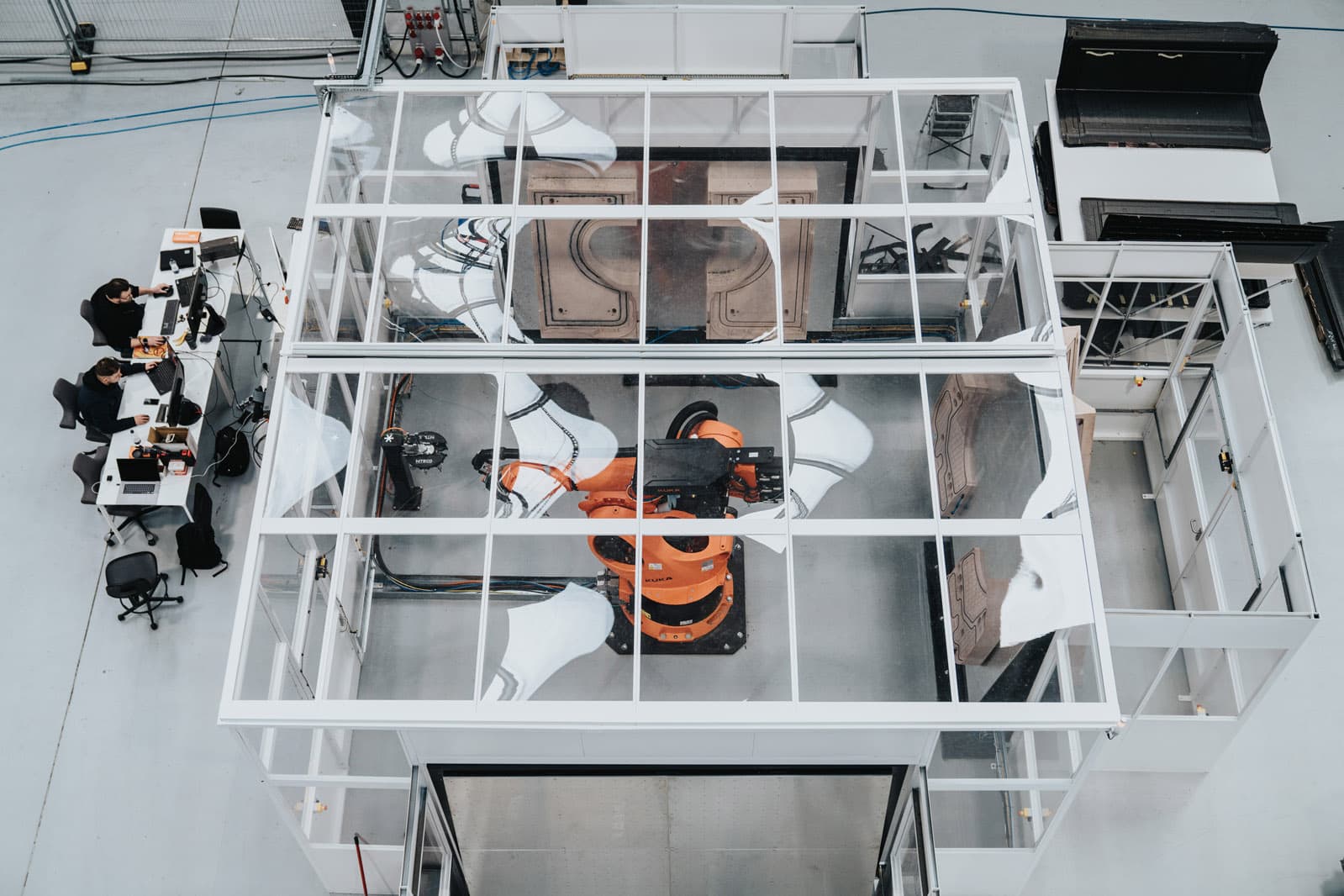
Musk spent years at Tesla pursuing the “machine that makes the machine” - but ultimately scaled back ambitious automation because unreliable robots bottlenecked production. Arrival invested millions in automated microfactories, and even a project to build their own CNC machines, yet serial production slowed rather than accelerated. Tesla ended up developing extremely specialised lines like the rest of the automotive industry; Arrival had a less forgiving end.
Were these ventures misguided? On the contrary - they were necessary experiments. But to demand that every product company also solve the sprawling, high-risk challenge of automated assembly will only yield incremental gains, not the paradigm shift that is so urgently needed.
Isn’t Everything Automated Already?
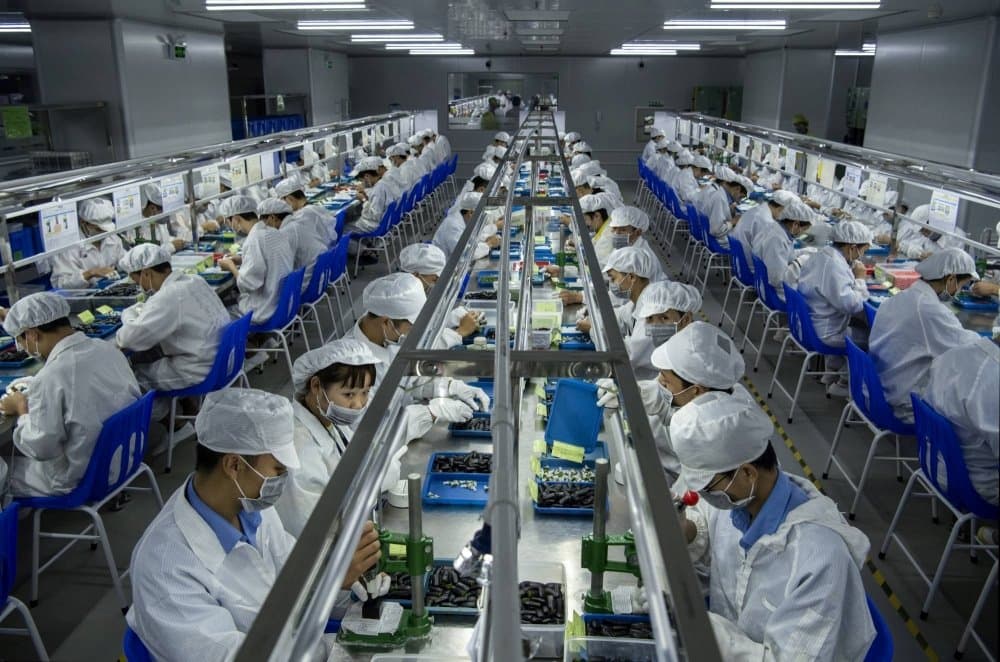
27 million people work in the assembly industry. There is $400bn worth of labour for the most menial and repetitive task of putting things together. There are two points to be drawn here: firstly, that this is a market primed for automation at a massive scale. But second, the distribution of this labour is horribly skewed at a global level. Of that 27m, only 2.5m are assemblers in Europe or the US. The West is catastrophically underprepared for the scaling required for the next generation of hardware - be that in robotics, space, or defence.
For too long we have turned a blind eye: allowing this critical layer to be offshored to wherever labour is cheapest. But the West is waking up. There are a plethora of companies seeking to address the manufacturing gap and to rebuild industrial autonomy. Companies like Machina Labs, Atomic Industries, and Saeki are defining new software and AI driven approaches to fabrication. Nox Metals is rebasing supply chain away from legacy monopolies. Hadrian, Protolabs, Isembard, and the like are democratising and automating end-to-end production.
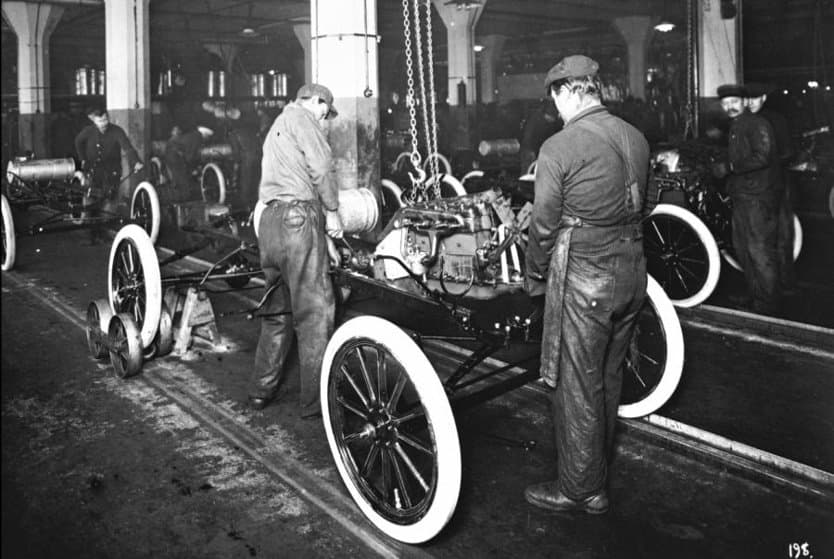
But where are the solutions for generalising assembly? By assembly I don’t mean pick-and-place machines, or automotive assembly lines, or experiments with humanoid robots. Automotive manufacturers have been building sophisticated but specialised lines since the days of Ford. However, what we need now are deterministic assembly lines that can ramp up elastically on-demand; that adapt rapidly to adversary-driven design changes; that trace quality and process control by default - not as an afterthought.
The Hardware Squeeze
At the first order, it’s easy to see why assembly hasn’t been solved. First, it’s historically been cheap to offshore labour. There’s a reason that Foxconn is worth $100bn+, even though it’s the same reason why they employ millions of people - and have margins of less than 3%.
Second: it’s really hard. Assembly is intrinsically hard to generalise. Process complexity grows exponentially as part count, variation, and tolerance stack up. Unlike pick and place for electronic PCBs, assemblies come together across multiple axes, orientations, and constraints - simply holding parts securely is non-trivial (the workholding market alone is worth ~$10bn). Add in non-rigid components like wire-harnesses and textiles, and the difficulty explodes.
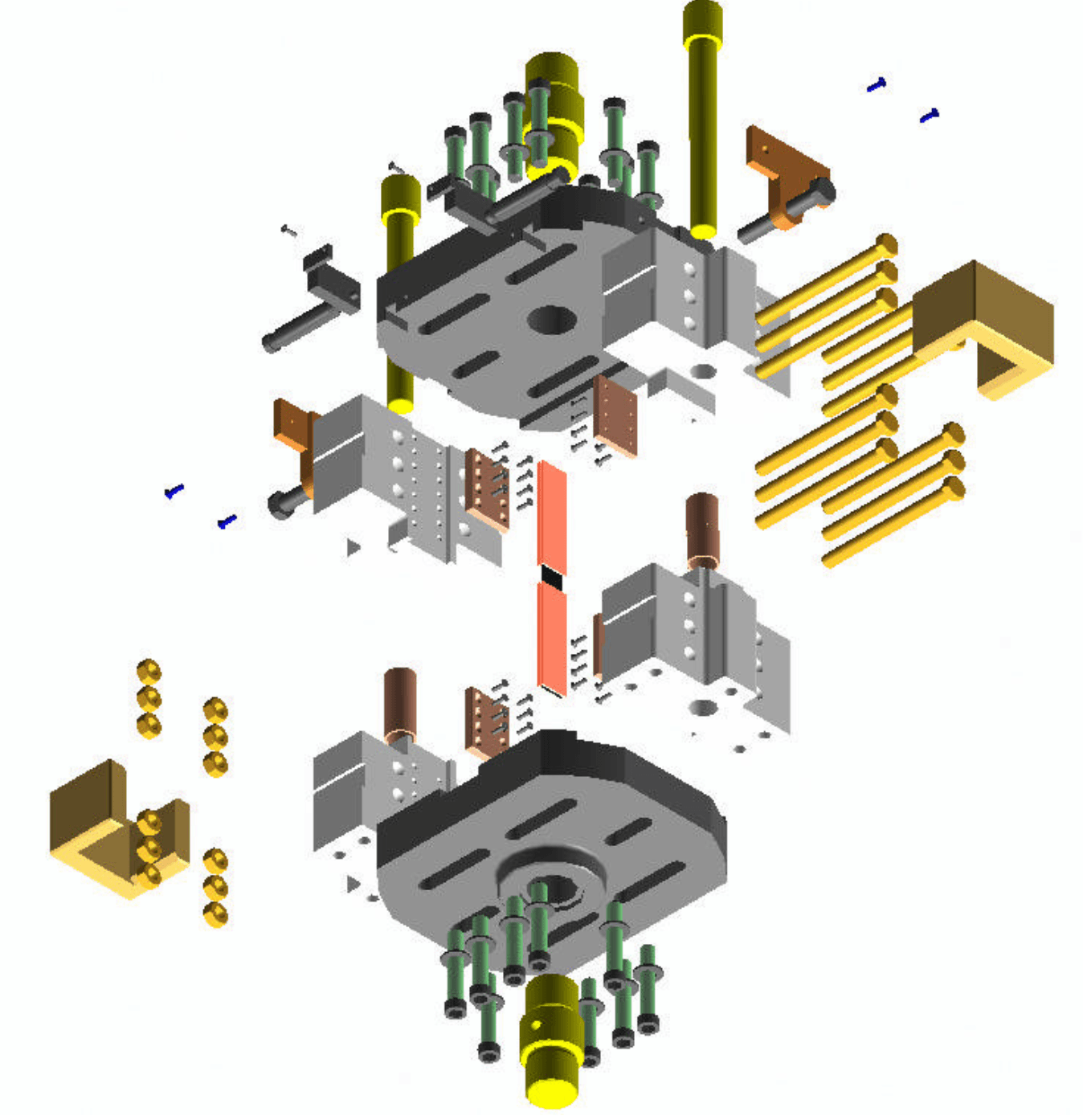
The domain of possible process steps is both large and diverse. Building even a single high-throughput assembly line requires substantial upfront capital expenditure, sufficient volume to justify fixed costs, and deep vertical integration of equipment, software, and talent. To build the machines that can handle broad classes of assemblies - rather than one narrowly defined product - is therefore an order of magnitude more difficult.
However, these very constraints are what make assembly the decisive bottleneck now. Labour is no longer cheap, stable, or geopolitically reliable. Demand has shifted from forecastable to urgent; waiting years to design and commission specialised lines is no longer acceptable. Ukraine needs drones and defences yesterday. Every month that a datacenter waits for installation, bring-up, or power is tens of millions in lost value. Satellites need solar, radiators, and compute at an unprecedented scale. Product architectures now evolve monthly, not annually. In this environment, bespoke assembly lines are liabilities. Scaled production must move at the same pace as design itself.
The New OEM
In the 1940s, CNC machines abstracted away artisanal metalworking skill. Overnight, operators saw 10x the throughput. Parts became predictable, scalable, and inspectable. Critically - the same CNC machine with the same machining file can now be duplicated across factory floors and borders to produce an identical part anytime, anywhere. In the last few decades this machine has become the fundamental unit that made geometry scalable.
We are now at a confluence of radical technological change. Reasoning models are at the point of being able to understand and decompose the complex steps for assembly. Robotics hardware is being commoditised and open-sourced. Software for the MES or ERP layer - once the domain of specialised companies - can now be constructed near-overnight. We are primed for a new type of machine to abstract away assembly, just as the CNC did for geometry. This will be the next step change in industrial scale.
These machines must be just as atomic as the CNC. They must be reconfigurable and therefore defined primarily by software. They must express a dynamic assembly DSL that can understand and characterise complex assemblies. They will be deterministic, capable of producing hundreds of thousands of identical products with minimal variance. Assembly lines built from such machines could be programmatically designed, evolve together with the product design, and be replicated indefinitely.
The Power Law
Assembly is the final prerequisite for truly self-replicating factories. Materials processing, machining, and fabrication can already be largely cloned. Assembly cannot. Today, factories scale with people by hiring, training, and transferring tacit knowledge. This makes industrial capacity slow to expand, difficult to secure, and tightly bound to geography. Without programmable assembly, scale remains a function of labour markets rather than industrial capability. Automated assembly will close the loop for factories to reproduce themselves, elastically and indefinitely.
What this unlocks is obvious but nonetheless exciting. Every production run exponentially grows capability. The machine builds the machine. Populations globally are contracting; there is an existential need to continue producing physical units of value by forging products for the real world. This is the only way to support us indefinitely.
And then? Beyond our current supply chains - what does infinite physical scaling unlock at the civilisational level?
The Dyson Sphere is a work of science-fiction, so called because it encloses and harvests the energy of an entire star. But to anyone who has already encountered the concept - the title of this essay should have been obvious.
The Dyson sphere will build itself.
- Will